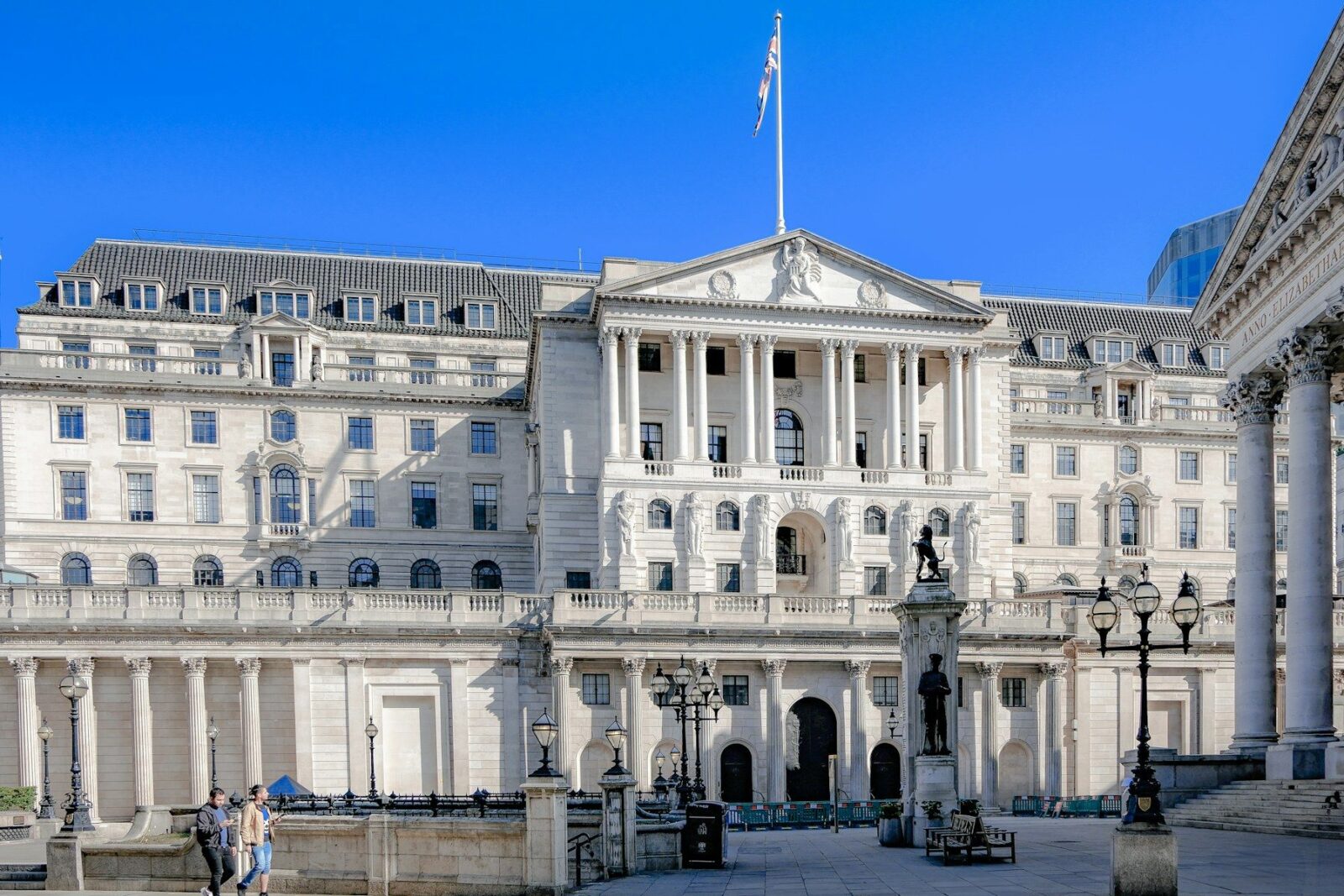
The Bank of England held Bank Rate at 3.75% on 17 September 2026, but three of the nine members of its Monetary Policy Committee (MPC) voted to raise it to 4%. The next decision, with a full new forecast, is due on 5 November 2026. As at 9 October 2026, Bank Rate remains 3.75%, according to the Bank of England.
The rate has not moved since it was cut from 4% on 18 December 2025, according to the Bank’s official Bank Rate series. What changed in September was the vote: a third of the committee wanted an immediate rise.
How the committee split
The Monetary Policy Summary and minutes record a 6-3 vote. Andrew Bailey, Sarah Breeden, Swati Dhingra, Clare Lombardelli, Dave Ramsden and Alan Taylor voted to hold. Megan Greene, Catherine L Mann and Huw Pill voted for a rise of 0.25 percentage points.
Even the majority sounded uneasy. The Governor, Andrew Bailey, said holding was appropriate “at this meeting”, but that if the conflict in the Middle East “persists for an extended period, as appears to be the case”, and the risk of second-round effects increases, “it is likely that policy may have to tighten”. On the other side, Megan Greene argued that waiting for definitive evidence of second-round effects “would leave policy behind the curve”.
The committee as a whole judged the risks to inflation to be “tilted to the upside”. It also voted unanimously to run its stock of gilts bought for monetary policy down to zero by the end of 2034, at an annual average pace of £46bn, made up of £20bn a year of sales plus gilts reaching maturity.
The inflation picture
CPI inflation rose to 3.1% in the 12 months to August 2026, from 2.9% in July, the Office for National Statistics reported on 16 September. Core CPI was 2.6% and CPIH 3.3%. Transport made the largest upward contribution, with motor fuel prices up 23.0% on the year.
The Bank expects inflation to climb further. Based on energy prices at the close on 14 September, the minutes put CPI at around 3¾% in the fourth quarter of 2026 and slightly above 4% in the first quarter of 2027, against a 2% target. Brent crude reached US$106 a barrel on 14 September, and Ofgem’s price cap for October to December was set at £1,723, with a substantial further rise expected in early 2027.
Where savers and borrowers stand
| Measure | Latest | Period |
|---|---|---|
| Bank Rate | 3.75% | 8 October 2026 |
| CPI inflation | 3.1% | August 2026 |
| Effective rate on new fixed-term deposits | 4.24% | August 2026 |
| Effective rate on existing easy-access (sight) deposits | 1.65% | August 2026 |
| Effective rate on newly drawn mortgages | 4.60% (4.45% in July) | August 2026 |
| Effective rate on all outstanding mortgages | 4.00% | August 2026 |
Sources: Bank of England Bank Rate series; ONS; Bank of England Money and Credit, August 2026, published 29 September 2026.
Savers
New fixed-term deposits paid an effective 4.24% in August, above CPI inflation of 3.1%. Money left in easy-access accounts did far worse: the average rate on the stock of sight deposits was 1.65%, well below inflation. Households withdrew £1.6bn from interest-bearing easy-access accounts in August and paid £4.4bn into ISAs, the Bank’s figures show.
A fixed-term rate is set when the account opens, so a change in Bank Rate affects new deals rather than existing ones. For how cash compares with short-dated government bonds, see our guide to gilts versus a savings account, and for the cash ISA limit falling to £12,000 for under-65s from April 2027, see our cash ISA changes guide.
Borrowers
Mortgage pricing has already moved. The effective rate on newly drawn mortgages rose to 4.60% in August from 4.45% in July, while the rate on all outstanding mortgages was 4.00%. Net approvals for house purchase fell to 54,900 in August, below an average of around 60,100 over the previous six months. Tracker mortgages linked to Bank Rate change when the rate changes; fixed-rate borrowers meet the new pricing when they remortgage.
The dates to watch
- 21 October 2026: September CPI from the ONS.
- 28 October 2026: the Budget, confirmed by the Chancellor in a letter published by HM Treasury on 31 July, with the OBR‘s economic and fiscal outlook on the same day.
- 5 November 2026: the MPC decision, minutes and the November Monetary Policy Report.
- 17 December 2026: the last MPC decision of the year, per the Bank’s published dates.
The November meeting comes with a full forecast, so it will show how the committee now reads the energy shock and the Budget. Until then, the committee’s own words set the terms: it “stands ready to act as necessary” to keep CPI inflation on track for the 2% target in the medium term. Gilt yields have already risen sharply; see gilt yields at multi-decade highs.